
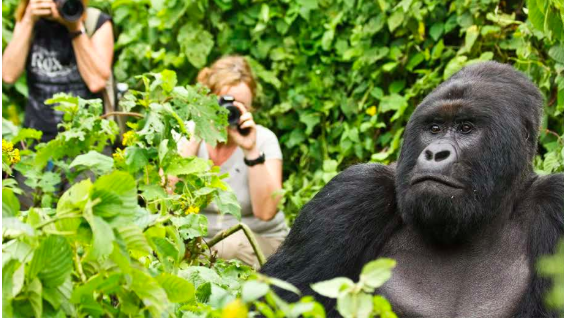


Most visitors to Rwanda trek gorillas once. Some come back for a second time years later. A growing number of travellers choose a third path: two gorilla treks in Rwanda during the same trip, on separate days, with two different families. Everything happens within one national park, one lodge region and one compact itinerary, so the logistics are simpler than a cross-border double trek in Uganda and Rwanda.
This guide explains why travellers choose two treks, how the permits work, what to expect from different families, how to pace the days, what it costs and how to plan well.
Why Do Two Treks in One Country?
Different families, different stories. Each habituated family has its own size, personality and daily rhythm. A conservation database listing Rwanda’s groups shows how widely they vary, with Igisha at 35 members, Susa at 21, Agashya at 20, Isimbi at 16 and Kigoma at just 5. Group sizes shift over time as babies are born and families split, but the principle holds: no two encounters are alike.
A second chance at the best moments. Gorillas may be resting on one day and playful on the next. Two treks improve your chances of seeing a wider range of behaviour, from grooming and feeding to infants wrestling and silverbacks asserting authority.
Better photography. Forest light is difficult, and photographers often need a trial run to learn what works. A second trek lets you apply what you learned.
Convenience. You stay in the same region and can use the same lodge for both nights, with no border crossings, long transfers or repacking.
Support for conservation. Permit revenue funds protection, community projects and habitat expansion. Two permits mean double the contribution.
How the Permit System Works
Every trek requires its own permit, issued by the Rwanda Development Board. A Rwanda gorilla permit costs USD 1,500 per person, set by the Rwanda Development Board, and the price is reported to hold steady for 2026/2027. For two treks, you need two permits on two different dates, so the permit cost for a foreign non-resident is roughly $3,000.
The standard conditions apply to each trek: a 2026 guide summarises them as a minimum age of 15, a maximum of one hour with the gorillas and no more than eight visitors per gorilla group. Because your two permits fall on different days, you will not be assigned to the same family twice in a row unless you specifically ask and the park agrees, which is uncommon.
Always confirm current prices and any seasonal offers directly with the Rwanda Development Board or your operator, since rules and prices can change between tariff periods.
Choosing Your Two Families
Family allocation is decided by the park on the morning of each trek, based on group sizes, fitness levels and the families’ locations. You can request a preference, and a good operator will relay it, but nothing is guaranteed. Still, understanding the differences helps you set expectations.
One park-based source notes that Volcanoes National Park has twelve fully habituated gorilla families, with a few others habituated solely for research. Names you may encounter include Susa, Sabyinyo, Agashya, Amahoro, Kwitonda, Karisimbi, Hirwa, Umubano, Muhoza, Isimbi, Kwisanga and Igisha, though the exact list and sizes change.
Easier hikes. Some families tend to range closer to the park boundary and need shorter walks, which suits less experienced trekkers.
Harder hikes. Groups that live higher on the volcano slopes may require several hours of steep climbing. Karisimbi, for example, is associated with higher altitude ranges, so expect a more demanding day.
Large families. Big groups usually mean more babies, more interaction and more variety, but they can also be more spread out.
A sensible approach is to request a moderate family for your first trek, then decide whether to ask for something harder or easier on the second day, depending on how your legs feel.
One more point: the park sometimes rotates access to newly habituated groups to give older families a rest from tourism. One source notes that the Rwanda Development Board occasionally rotates access to newly habituated groups to give older gorilla families time to rest from tourism exposure. This is another reason flexibility serves you well.
Sample Itineraries
4-Day Itinerary
- Day 1: Arrive in Kigali and drive to the Musanze region, about three hours from Kigali.
- Day 2: First gorilla trek, with an afternoon of rest.
- Day 3: Second gorilla trek with a different family.
- Day 4: Morning at leisure or optional activity, then return to Kigali.
This compact plan uses back-to-back trekking days, which suits fit travellers.
5-Day Itinerary with a Rest Day
- Day 1: Arrival and transfer to Volcanoes National Park.
- Day 2: First gorilla trek.
- Day 3: Rest day with golden monkey tracking, a cultural visit or a gentle walk.
- Day 4: Second gorilla trek.
- Day 5: Return to Kigali.
A rest day improves comfort and is the option most operators recommend. Muscles that feel fine after the first trek can be sore by the next morning, particularly after steep, muddy terrain.
6-Day Itinerary with Extras
Add a Kigali city day at the start, including the Genocide Memorial and a craft market, then follow the five-day plan. You can also extend the trip with Akagera National Park for a savannah safari or Lake Kivu for a restful end.
Costs: What to Budget
Permits are the largest fixed expense. Two permits cost roughly $3,000 per foreign non-resident, so the trip is a premium purchase from the outset. On top of that, plan for:
- Accommodation: Three or four nights near the park. One 2026 source lists mid-range lodges at $300 to $600 per night on full board, and luxury lodges at $1,200 to $3,500 or more per night. A single lodge for the whole stay keeps logistics simple.
- Transport: A private 4×4 with a driver-guide, or shared transfers.
- Meals: Often included with lodge stays.
- Porters and tips: A porter for each trek is inexpensive and supports local families.
- Insurance and visa: Confirm requirements for your nationality, and choose insurance that includes medical evacuation and permit cancellation.
For comparison, one analysis suggests that a seven-day Rwanda gorilla safari typically costs $3,500 to $5,500 per person, and a four- or five-day double trek may fall in a similar band at mid-range comfort once you add the second permit. Treat these as guidelines, request an itemised quote and confirm what is included.
Comparing the Cost with a Rwanda and Uganda Double Trek
Because Uganda’s permit is cheaper, travellers often consider trekking once in each country. One guide places Uganda’s permit at $800 per person in high season, or $600 in low-season months. A Rwanda-plus-Uganda double costs about $2,300 in permits, compared with roughly $3,000 for two Rwanda treks.
So why choose two treks in Rwanda? Because the benefits are simplicity and ease:
- No border crossing or visa complexity
- Shorter, more predictable treks (a 2026 comparison suggests Rwanda treks run 30 minutes to 4 hours)
- One lodge, one region, minimal driving
- A consistent standard of infrastructure
If budget is the priority, Uganda adds savings. If time, comfort and predictability matter more, two treks in Rwanda are hard to beat.
Best Time to Go
Gorillas can be trekked all year.
- Dry seasons (June to September and December to February): Trails are firmer and walking is easier. These are also the busiest months, so book permits for two specific dates well in advance.
- Wet seasons (March to May and October to November): Landscapes are lush, visitors are fewer, and trails can be slippery. Waterproof gear matters.
Because you need two permits on specific dates, flexibility is limited. Book as early as possible and ask your operator which dates have availability.
Physical Preparation
Two treks in a short period require good stamina. Hill walking, stair climbing and long hikes in the weeks before departure make a real difference. Aim to train with a loaded daypack and the boots you will wear in Rwanda.
Hire a porter for both days. They carry your bag, offer a steady hand on steep or slippery sections and earn income that benefits their families. Pack a few light layers, because the temperature changes quickly between lodge and forest.
What to Pack
- Broken-in hiking boots with good grip
- Long trousers and long-sleeved tops in muted colours
- Waterproof jacket and light layers
- Gardening gloves
- Hat, sunscreen and insect repellent
- Daypack, water bottle and snacks
- Camera with strong low-light performance, spare batteries and a rain cover (no flash)
- Dry clothes for the evening, since boots and trousers may not dry overnight
Rules and Etiquette
- Keep about seven metres’ distance unless gorillas approach.
- Do not trek if you are unwell. Gorillas are vulnerable to human illnesses, and rangers may refuse entry.
- Speak softly and move slowly.
- Do not eat, drink or smoke near the animals.
- No flash photography.
- If a gorilla approaches, stay calm and follow your guide’s instructions.
Choosing an Operator
A double trek means two permits, two early starts and two chances for logistics to go wrong, so operator quality matters. Look for a licensed company with recent verifiable reviews and clear pricing. Confirm that both permits are secured in writing before you pay in full, and ask about refund policies if you fall ill. Ask whether they will relay family preferences to the park, how rest days are handled and what support you receive if a trek is difficult. Treat prices far below the official permit rates with caution.
Conclusion
Two gorilla treks in Rwanda turn a single unforgettable hour into a richer, more rounded experience. You meet two families, witness different behaviour and gain a deeper sense of how these animals live, all within one park and one comfortable base. The cost is considerable, with permits alone around $3,000, but the logistics are smooth and the encounters are consistently rewarding. Book early, include a rest day if you can, prepare physically and work with a trustworthy operator. When you hear the branches rustle and a silverback steps into view a second time, you will understand why so many visitors say that one trek simply is not enough.
Key Takeaways
- Two gorilla treks in Rwanda require two permits on two dates, each at $1,500 per foreign non-resident. Verify current rates.
- Both treks take place in Volcanoes National Park, about three hours from Kigali.
- You will be assigned different families, and the park decides allocation on the morning of each trek.
- A rest day between treks improves comfort and is widely recommended.
- Rwanda treks generally run from 30 minutes to four hours, making them more predictable than Bwindi.
- Hire a porter, pack waterproof gear and follow all health and etiquette rules.
- Book early and confirm both permits in writing before paying in full.
Frequently Asked Questions
- Can I do two gorilla treks in Rwanda?
Yes. You need two permits for two separate days, and you will normally be assigned a different family each time. - How much do two permits cost?
$1,500 per person per permit for foreign non-residents, so about $3,000 in total. Confirm current rates before booking. - Can I trek on consecutive days?
Yes, many travellers do. A rest day in between is more comfortable but not required. - Will I see the same gorilla family twice?
Usually not. The park allocates families each morning, and operators can request variety. - Can I choose which families I see?
You can state preferences, such as an easier or harder hike, but final allocation is made by the park. - How many days do I need?
Four days works for back-to-back treks. Five or six days allows a rest day and extra activities. - Is it better to trek in two countries?
Uganda offers lower permit prices and more families, while two treks in Rwanda are simpler and avoid border crossings. The best choice depends on your budget and priorities. - How hard are the treks?
They range from short and gentle to long and steep, depending on the family. Moderate fitness and a porter help. - What is the minimum age?
15 years. - What else can I do in the area?
Golden monkey tracking, a hike to Dian Fossey’s grave site, cultural visits and volcano hikes are popular, and Akagera or Lake Kivu can be added afterwards.